
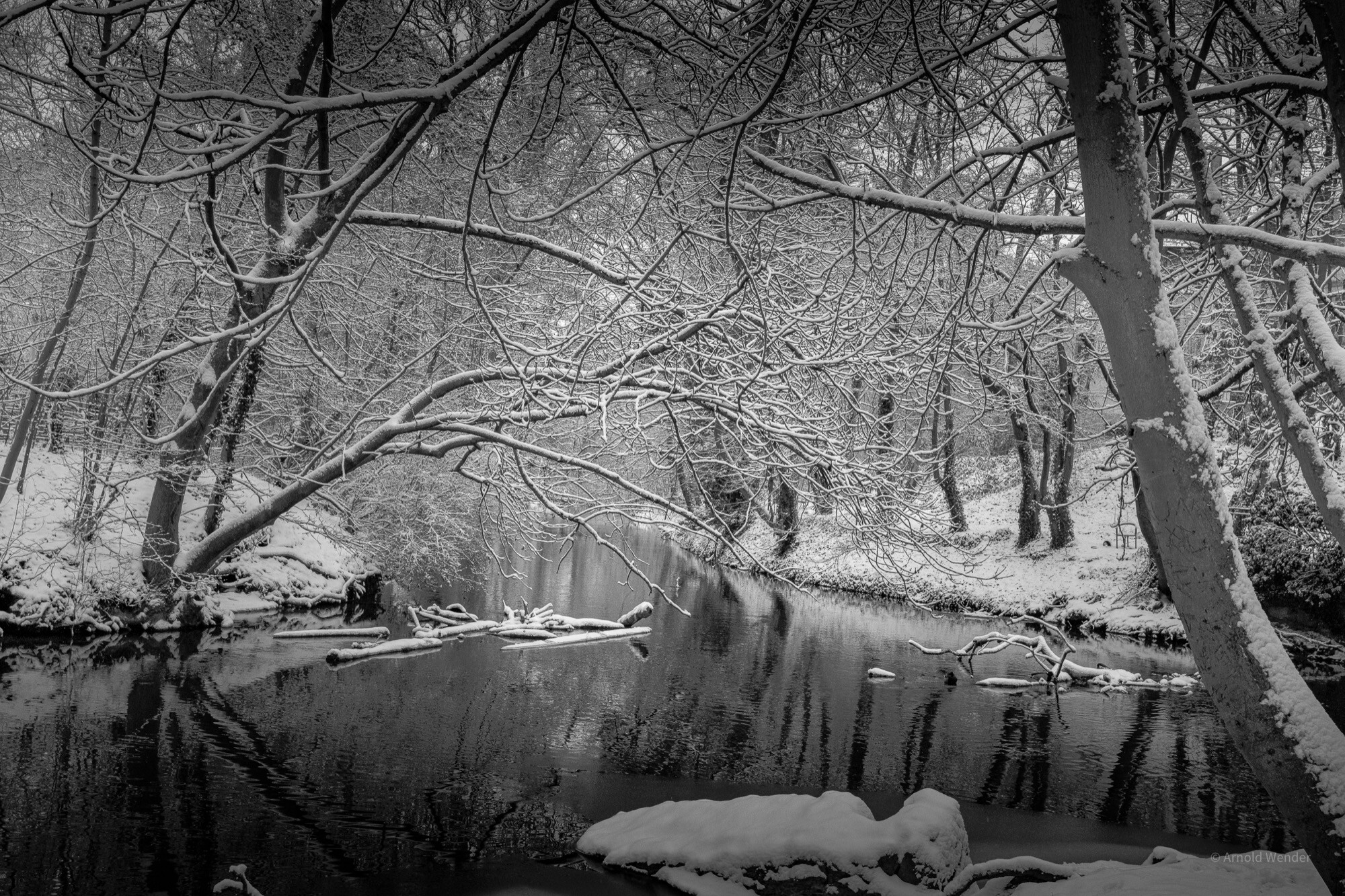
The Saale is the blue ribbon that threads through Halle, giving the city its very name. For landscape photographers, the river and its surroundings offer remarkable diversity — from tranquil floodplain landscapes to dramatic rock cliffs near Giebichenstein.
The Saale as a Photo Subject
Rivers are rewarding subjects. They create natural leading lines, offer reflections, and change their character with every season. The Saale near Halle is especially appealing because it feels almost wild in places — the banks are not uniformly reinforced, and willows and alders grow right to the water’s edge.
Morning at the Saale
The early morning hours are the best time for river landscapes. Mist often hovers over the water, particularly in autumn and spring. This fog creates depth and atmosphere that no filter in the world can replicate.
My settings for misty morning shots:
- Focal length: 35–70 mm for a balanced perspective
- Aperture: f/8 for consistent sharpness
- ISO: 200–400 (often still low light)
- White balance: Cloudy or Shade (warms up the mist tones)
- Tripod: Essential, as shutter speeds often reach 1/15 s or longer
Locations along the Saale
Klausbrücke and Mill Race
The Klausbrücke offers a deep view over the mill race — especially striking at low water levels when the stones in the riverbed become visible. With a long exposure of 2–4 seconds, the flowing water transforms into a silky ribbon.
Riveufer and Ziegelwiese
The Riveufer between Ziegelwiese and Burg Giebichenstein is one of the most beautiful river stretches. The towering rock cliffs on the opposite bank form a natural backdrop that glows warmly during golden hour.
Rabeninsel
Rabeninsel is a wild river island south of the city center. Here you will find enchanted paths, fallen trees, and still water surfaces — perfect for intimate nature shots away from the urban bustle.
Saale Floodplain near Planena
South of Halle, the Saale broadens into a wide floodplain landscape. Panoramic shots with expansive skies and flat terrain emerge here — particularly impressive under dramatic cloud formations.
Techniques for River Landscapes
ND Filters for Silky Water
A 6- or 10-stop ND filter extends exposure times to several seconds even in daylight. The result: flowing water becomes a smooth, misty surface while the surroundings remain sharp.
Polarizing Filter against Reflections
A CPL filter reduces reflections on the water surface, making the riverbed visible. It simultaneously enhances sky contrast and the saturation of green along the riverbanks.
Foreground Elements
A strong landscape shot needs an interesting foreground. Along the Saale, stones in the water, reeds on the bank, or an old wooden jetty serve as natural framing. I position these elements in the lower third of the frame and use a small aperture (f/11–f/16) for maximum depth of field.
The Saale rewards photographers who rise early. Morning light, mist, and silence — these are the ingredients for unforgettable landscape images right at the city’s doorstep.